
Xanadu.
A mythical place of ideal beauty and majesty.
Utopia.
Whether we realize it or not, we are all searching for it. Metaphorically. Seeking that place or state or whatever where everything is perfect.
Whatever perfect is.
Guess what? We'll never find it. Xanadu doesn't exist.
Perfection is a myth. Searching for it will leave us frustrated, tired, and ultimately empty. We can't waste our time looking.
We need to use our time making.
And while we will never make perfection—our world is too messy and junked up for that—we can, if we put in the effort, make something pretty okay.
And pretty okay is beautiful.
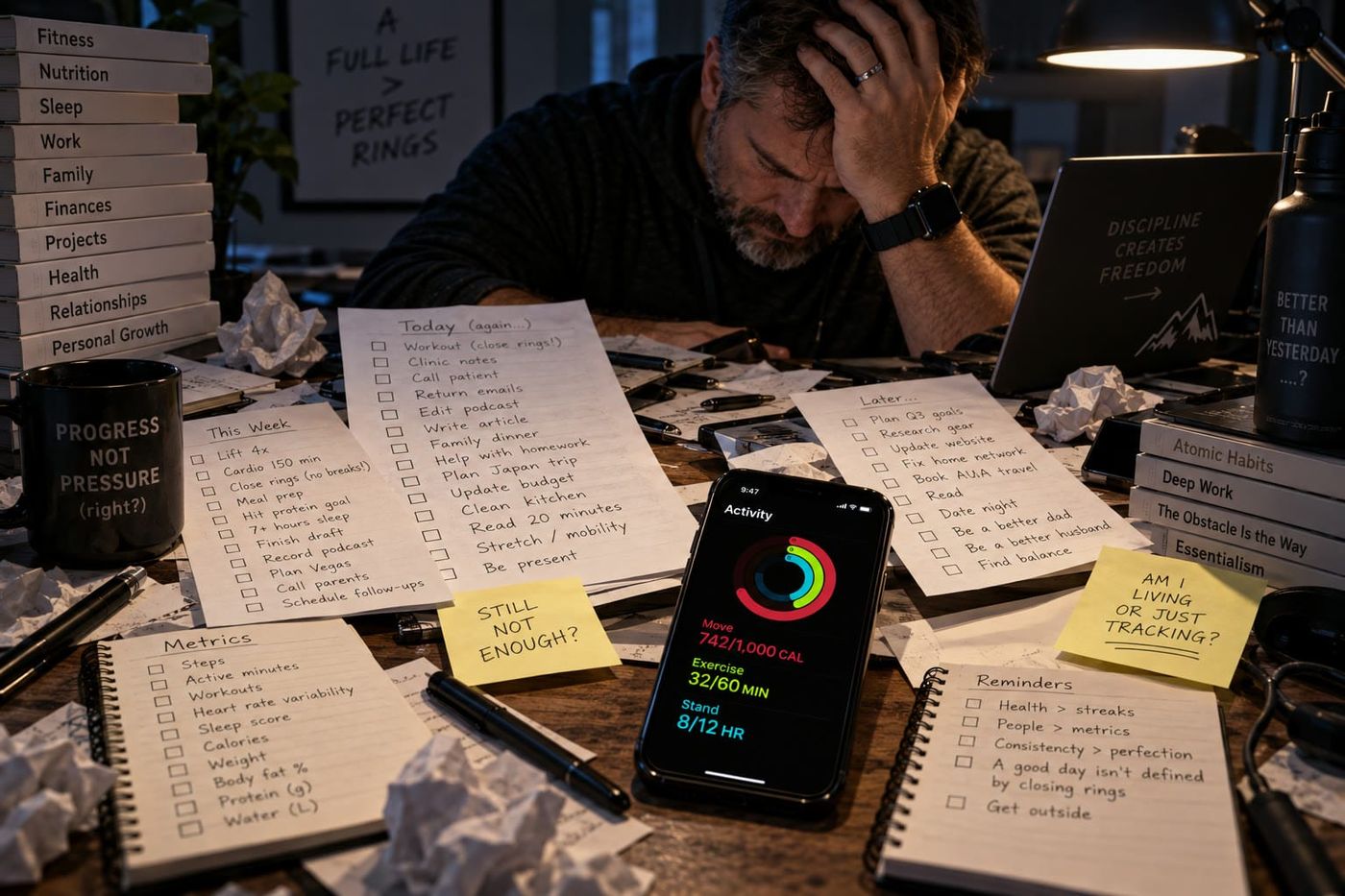
I've written about my quest to find task management utopia. My own mythical Xanadu. And I've failed. Time and again. Jumping from one system or app to the next. Remaining unfulfilled.
Over the course of May, though, something changed. That change was both internal and external. And I came to a realization: we all think in a unique way. Yes, we share opinions and beliefs with people around us. But the way our minds process and function is singular.
That's part of why this world is so messy. But also so beautiful.
And task management is a microcosm of this larger point. There are dozens—if not more—systems and applications out there. Because, despite what someone will try to convince you, there is no perfect system for everyone.
Because we are different and messy.
My internal change was embracing that idea.
I am weird. I know, I know. Duh. I promise, it didn't take me nearly 50 years to realize this. But it was recognizing this that led to the internal change. See, writing, for me, is a powerful tool. I enjoy the creative act alone, but there is something much more important. Writing is how I take the jumble that is mixed up in my brain and turn it into something.
Something recognizable. Something (hopefully) coherent. Something I can actually use.
But task management is often just a window full of checkboxes. That didn't engage me. I would open an app and look at it. It never mattered how much organizational power was in the tool: I bounced off.
And finally realizing that was a moment of clarity.
The problem wasn't the applications themselves. I jumped from one to the next because I didn't have a system that engaged me. And it didn't matter how many tutorials I had watched on how to harness the power of any one of the apps; if I wasn't engaged by the system, the tool was never going to work.
I decided to experiment.
There is power in experimentation. I think we should all be more willing to experiment in our lives. But I get it. It can be scary.
In this case, what did I have to lose? What I was doing wasn't working for me. I knew it and had admitted it here. So why not try something new?
Once I had embraced the internal change—the willingness to try something completely different—it was trivial to settle on the external change.
Enter the Daily Note.
I've heard people talk about daily notes for years. It is baked into some of the programs I use. But I never did understand the purpose of it. Now that I have been using it for the month of May, I really don't know what my problem was.
In short, it is a note, written every day, that can be whatever you need or want it to be.
For me, it took on the shape of a combined journal and task management. Writing every morning and every evening, I found that the process naturally brought tasks to mind. By reflecting on my day, my work, and my relationships, tasks that tied into each of those were more apparent.
The daily note was a perfect place to jot those down.
I started in NotePlan. But I soon tired of looking through an entire note to find the section of tasks, particularly on my phone, as I made it through the day. And since this was an experiment, I was free to make a change.
The details are less important, but the short version is this: I eventually settled on a combination of Obsidian and a number of automated tasks. Every morning, tasks in my note get pushed to Todoist (a real task manager), and every evening, things move the other direction.
I write in the morning, planning my day and tasks. I manage them throughout the day in Todoist. I reflect and wrap up at night, with a record of how I did with my tasks.
It is the most satisfied and engaged I have felt with a task management system in, well, literally in my life.
The purpose of this isn't to tell you to do exactly what I did. Hence, the lack of detailed steps on how I made these automations. That isn't the important part.
The key is this: treating this as an experiment encouraged me to push the limits. It not only gave me permission to adjust, it was a mandatory part of it. As soon as I found a friction point, I addressed it, adjusted, and moved on.
I've been making small adjustments all month long.
I'm honestly excited every morning and evening to write, plan, reflect, and make sure I am getting crap done. Because my system engages me. It works with how I think.
That is a powerful change. Instead of bouncing off a list of demands, I have integrated my tasks into my daily thought processing.
Here is the other key point: The system itself doesn't matter. What matters is if it helps you become who you want to be, not just do what you want to do.
Just getting things done doesn't matter nearly as much as we think it does.
Our actions should all serve to move us closer to what Aristotle called eudaimonia. A state of flourishing. Each one of us functioning at our highest capacity, living in alignment with our potential.
It takes work. I'm so far from reaching that potential. But I feel like I've unlocked one small tool to get me a step or two closer.
Experiment. Understand yourself. Know how you think, operate, function. And then do the work to approach eudaimonia. Yes, some days it is hard and sort of sucks.
But it's worth it.